KYC verification: meaning, required documents and timelines
KYC verification confirms your identity, but the documents and timelines depend on the service you use. Learn what the rules cover, how to protect your data, and how Microtaches verification works from a balance of 1,000 Ops before your first withdrawal or gift card order.
Has a platform asked for your ID before letting you use a service or receive a payment? You may be entering a KYC verification process. The request can be legitimate. What matters is understanding who is asking, why the documents are needed and where you should submit them.
This guide separates regulatory requirements from individual services’ operating rules. It explains what to prepare, how to interpret timelines and what to do after a rejection. Then it covers Microtaches, keeping identity verification, initial account approval and withdrawal eligibility separate. These are different steps, even when they appear in the same account.
- Access to verification
- 1,000 Ops
- Account balance needed to access the process.
- Maximum processing time
- 7 days
- These are business days.
- Balance for a first bank withdrawal
- 15,000 Ops
- To withdraw 5,000 Ops while keeping the reserve.
- Withdrawal payment
- Up to 3 weeks
- After approval of the withdrawal request.
These figures describe different stages, not a single countdown. Reaching the verification threshold does not make your balance immediately withdrawable. Identity processing time is also separate from payment time. Prepare your documents ahead of time, then check the conditions for your chosen payout method rather than assuming verification unlocks everything.
What does KYC verification mean, and what does it check?
KYC stands for Know Your Customer. According to Stripe’s official explanation, the process checks identity, authenticity and reliability. It is therefore broader than simply uploading a photograph of your ID. The information requested depends on the service and the relationship involved.
There is a useful distinction between identification, which collects your information, and verification, which checks whether it is accurate. Entering your name and address is identification. Comparing those details with supporting documents is verification. France’s ACPR banking and insurance supervisor describes these as complementary obligations in its guidelines.
In a regulated financial setting, understanding the customer may also involve the purpose of the relationship or additional information. France’s Monetary and Financial Code provides for relationship information to be updated throughout that relationship. An initial approval does not necessarily mean that no further checks will ever be requested.
KYC and AML are not synonyms. AML means anti-money laundering: efforts to prevent illegally obtained money from appearing legitimate. KYC is one tool within that broader framework. For users, the distinction matters because an identity check is not a general certification of a platform’s reliability or a guarantee that every transaction is safe.
Why do services verify identity, and is it legally required?
The main regulatory background is the prevention of money laundering and terrorist financing. Money laundering makes funds from illegal activities appear lawful. Identity checks help the professionals covered by these rules establish who they are dealing with, rather than relying entirely on information someone types into a form.
Internationally, the FATF Recommendations provide standards that countries adapt to their national circumstances. FATF is the Financial Action Task Force, known as GAFI in French. Its Digital Identity guidance connects customer due diligence—checks to understand a customer—to Recommendation 10. These standards are not laws directly binding every internet user.
In the European Union, Anti-Money Laundering Directives, often shortened to AMLD, frame these obligations. The Fourth Anti-Money Laundering Directive aims to prevent misuse of the financial system for money laundering and terrorist financing. The amending directive on EUR-Lex developed that framework. A law’s adoption and its application date are different things.
In France, Article L. 561-5 of the Monetary and Financial Code requires covered professionals to identify customers before establishing a business relationship. That does not mean every work platform has the same obligations as a bank. Payment rules or abuse prevention may also explain a check. Meanwhile, DAC7 is a separate tax-reporting framework, not an anti-money laundering directive.
Where will you encounter identity checks besides banks?
Banks are the most familiar example: you provide account-opening information, then documents that support it. If you use a neobank—a digital-first banking service—read its account-specific requirements too. A commercial name or app-based experience does not, by itself, establish the service’s legal status or the checks it must perform.
Payment and transfer providers also carry out checks. For example, Wise’s verification guide mentions photo ID, proof of address and, depending on the process, a picture of the person holding their ID. This describes Wise’s requirements; it is not a mandatory document list for every payment service.
Some work platforms verify identity as well. Upwork provides an identity verification process for freelancers, according to its official help center. Microtaches requires verification before the first withdrawal or shop order. In either case, the existence of an identity check alone does not establish that the platform is a bank.
Location matters. The BCEAO, the Central Bank of West African States, has published instructions on customer identification, identity verification and customer knowledge for financial institutions. European rules do not apply uniformly across Africa. Check which country, account type and specific service the documentation covers before using it to prepare your application.
Which documents are required for KYC verification?
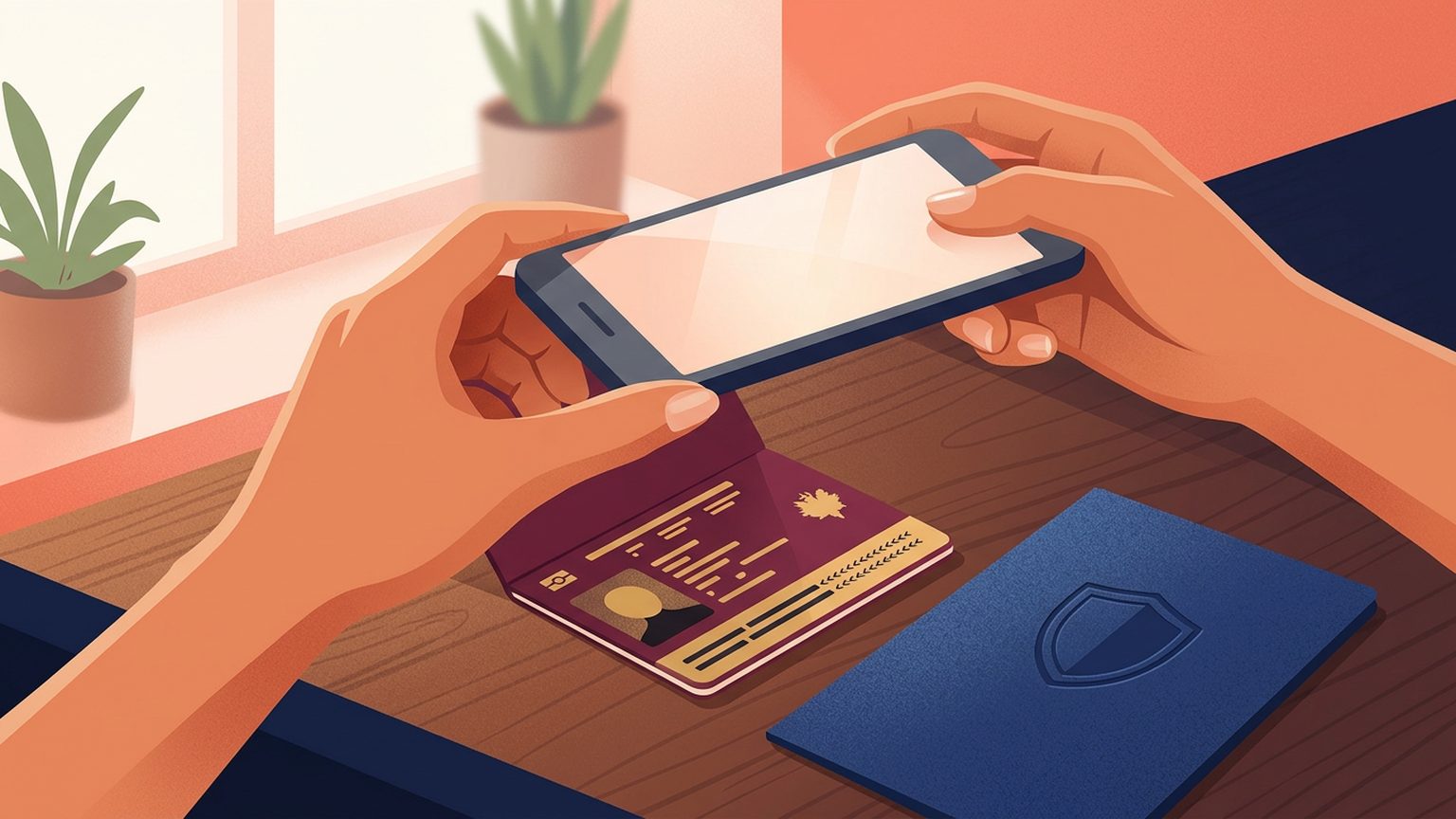
Start with the list inside your official account. According to the CNIL, France’s data protection authority, banks use a valid official document bearing your photograph for anti-money laundering identity checks. Identity cards and passports are familiar examples, but accepted document categories vary by provider and country. Do not assume another service’s list applies.
Proof of address connects your stated home address to a supporting document. Wise’s official address-verification guide says the listed utility bills, bank statements and council tax bills must be no more than three months old. Wise also requires the full name and address to match the account. That age limit is not universal.
| Purpose | Example | What to check | |
|---|---|---|---|
| Identity document | Confirm identity | Official photo document | Accepted types and validity |
| Proof of address | Confirm residence | Bill or statement at Wise | Required age and name |
| Additional photo | Support some checks | Photo holding ID at Wise | Whether it is requested |
| Source of funds | Explain certain transfers | Documents requested by Wise | Which process applies |
| Business information | Identify the business | Beneficial owner, if applicable | Relevant business account |
| Microtaches application | Verify your identity | ID and proof of address | List in your account |
Sources: CNIL, guidance on bank copies of identity documents; official Wise identity and address guides; Légifrance, Article L. 561-5; internal Microtaches rules. Adapt these examples to the service.
An additional photo, sometimes called a selfie, is not always required. Wise also says it may request source-of-funds documents for larger transfers. Business accounts can have additional requirements, including identifying the beneficial owner—the person who ultimately controls the business. Do not automatically transfer those requirements to an individual account.
For Microtaches, the confirmed documents are an identity document and proof of address. Check the official instructions for accepted documents by country, maximum document age and any additional photo requirement. An IBAN is a bank-account identifier used for payment; it should not be presented as a mandatory third identity document for every verification process.
- Open each file before uploading it to check that the contents are readable.
- Photograph the document flat, in even light, without glare.
- Keep the edges and information needed for the check visible.
- Do not hide details or add a watermark without checking the recipient’s instructions.
How does identity verification work, step by step?
The exact process varies, but the basic sequence is straightforward. You provide information, submit the requested supporting documents and wait for checks. A successful upload is not the same as identity approval. The service may still need to review your documents, ask for clarification or make a decision.
Before starting, compare your account name and address with your documents. A difference may be legitimate, such as a name change, but it should be explained rather than hidden. Preparing that explanation helps you avoid contradictory submissions. The following sequence is a practical guide, not a replacement for the service’s instructions.
- 1Confirm the requestRequest
Sign in directly to your official account. Find the request there instead of following a link from an unknown contact.
- 2Enter your informationInformation
Provide the requested details consistently with your documents. Explain a discrepancy instead of concealing it.
- 3Upload supporting documentsDocuments
Use the designated channel. Check file formats, readability, required document sides and any document-age limit.
- 4Wait for the checksReview
Read the timeline for this specific process. Distinguish your deadline to respond from the service’s processing time.
- 5Act on the responseDecision
Your identity may be approved, additional information requested or the application rejected. Address the specific issue identified.
- 6Update details when neededFollow-up
If your circumstances change, check the update rules. Whether another check is needed depends on the service.
This process checks identity, not the quality of a task response. On Microtaches, responses undergo manual or automatic review before Ops are credited. A rushed or incomplete response can be rejected. Our guide to response validation explains that separate stage; passing an identity check does not replace it.
How long does verification take, and what if it is rejected?
There is no universal KYC processing time. The provider, type of check and requests for additional information can change the timeline. Read when the clock starts: after a document upload, during a transfer or when a request reaches you. Those situations describe different processes and should not be treated as interchangeable.
For address verification, Wise says it reviews documents and emails within two working days of upload. Its separate official guide, “How does verification affect my transfer’s speed?”, gives a five-to-fourteen-working-day target when verification is requested during an existing transfer. That second range does not apply to every Wise check.
| Check | Stated timeline | Starting point | Type of deadline | |
|---|---|---|---|---|
| Wise | Proof of address | 2 working days | Document upload | Review and email |
| Revolut Business Italy | Business identity | Up to 5 business days | Not specified here; check official instructions | Stated processing time |
| Microtaches | Identity | 7 business days maximum | Not specified here; check your account | Processing |
| Upwork Enterprise clients | Requested verification | Generally 7 days | Receipt of request | Time allowed to complete verification |
Official sources: Wise, “How do I verify my address?”; Revolut Business Italy, “Identity verification requirements”; Upwork, “Verify your identity as an Enterprise client”; internal Microtaches rules. Checked in November. These processes are not directly comparable.
Business days are not the same as calendar days. Microtaches states a maximum of seven business days for processing. Check your account for the precise starting point and handling of incomplete applications. Do not mechanically add that period to the payout timeline without looking at which approvals have actually taken place.
A rejection can involve an incomplete, expired or obscured document, or details that do not match the account. PayPal’s US business-confirmation page lists these document exclusions and allows additional evidence for a name change. These are possible document-related reasons, not a statistical ranking of the most frequent causes across providers.
- Read the exact reason. Identify which document or account detail needs attention.
- Fix what is necessary. Retake an unreadable photo or provide the specific evidence requested.
- Explain legitimate differences. A change of name or address may require supporting information.
- Contact official support. If the stated timeline has passed, provide your submission date and any available reference rather than repeatedly uploading documents.
When can you start KYC verification on Microtaches?
Microtaches registration is free. The team approves each account, and completing the profile questionnaire is mandatory. Finishing the profile gives a 10 Ops bonus, under internal Microtaches rules. This initial account approval is different from the identity verification required before withdrawals and shop orders. One does not replace the other.
You can begin accumulating Ops before identity verification. Under Microtaches rules, the process becomes accessible at a balance of 1,000 Ops. That threshold opens an administrative step; it is neither the withdrawal minimum nor a promise that you can immediately place a shop order. Shop conditions must be checked separately.
| Ops | |
|---|---|
| Access to verification | 1,000 Ops |
| Minimum requested withdrawal | 5,000 Ops |
| Non-withdrawable reserve | 10,000 Ops |
| Balance for first bank withdrawal | 15,000 Ops |
| Access to other available payout methods | 25,000 Ops |
Verification is mandatory before your first withdrawal or first shop order. The account receiving a payment must be in your name, matching the verified identity document. Do not enter a parent’s or friend’s account, even with permission. Check that you have a compatible payment account in your own name before planning a withdrawal.
How can you protect your documents and spot a fake request?
An identity request should come with understandable information about how the data will be used. The CNIL recommends collecting only what is necessary and informing people when their information is collected. Look for who processes your documents, why they need them, who may receive them and how long they are kept.
The GDPR, the European Union’s personal-data regulation, requires security measures appropriate to the risk. That is not a guarantee against a breach. Microtaches’ possible verification provider, storage details and exact retention period are not specified in the information available here. Check the official notice and our GDPR and data security guide.
Retention depends on the applicable framework. According to the CNIL’s guidance on bank copies of identity documents, banks retain these documents for five years after account closure or the end of the relationship. Do not automatically apply that period to Microtaches. A legal retention obligation can also limit deletion rights.
The CNIL also warns that ordinary email and consumer messaging channels are rarely safe without additional safeguards. Requests for fees, deposits to unlock earnings or secret codes are red flags. If someone directs you to work outside the platform through WhatsApp or Telegram, stop and verify the contact through the official service.
- Good sign:The request appears in your official account, which you opened directly.
- Good sign:The required documents and their intended use are explained.
- Good sign:The upload channel matches the official instructions.
- Good sign:You have checked the privacy notice and official support contact.
- Warning sign:Someone asks you to pay a fee to validate your identity.
- Warning sign:You must top up an account or make a deposit to unlock earnings.
- Warning sign:Someone asks for a password, secret code or code received by SMS.
- Warning sign:You are required to work outside the platform through WhatsApp or Telegram.
If you are unsure, do not send further documents until you have checked the request. Keep relevant messages and contact the service through its official website. Our guides to online job scams in Africa and legitimate work-from-home options without upfront payments explain these protective habits.
What does approval unlock for withdrawals and gift cards?
An approved identity fulfills a prerequisite; it does not make your entire balance available as cash. Under Microtaches rules, 1 Ops equals €0.0042 at withdrawal. The minimum withdrawal is 5,000 Ops, worth €21, while a non-withdrawable reserve of 10,000 Ops must remain. Keep those conditions separate from identity approval.
Your balance therefore needs to reach 15,000 Ops for a first minimum bank withdrawal. At the withdrawal rate, that balance represents €63, but you withdraw 5,000 Ops, worth €21, and retain the 10,000 Ops reserve. Our guide to converting Ops into euros and gift cards explains these different values.
| € | |
|---|---|
| 1,000 Ops | €4.20 |
| 5,000 Ops | €21 |
| 10,000 Ops | €42 |
| 15,000 Ops | €63 |
| 25,000 Ops | €105 |
Microtaches withdrawal conditions
Your Ops can be withdrawn to a bank account, a mobile money account or an online wallet. Bank transfer is available from the usual minimum; MVola, Orange Money, Wave, MTN MoMo, PayPal, Skrill and Neteller are available from 25,000 Ops; Revolut and Crypto are coming soon. In Workers in France and French-speaking Africa, mobile money is often the most convenient option.
| Type | Availability | Where it is used | |
|---|---|---|---|
| Bank transfer (IBAN) | Bank | Available from the usual minimum | Bank account with an IBAN, in Europe or elsewhere (fixed fee outside Europe) |
| MVola | Mobile money | Available from 25,000 Ops | Madagascar |
| Orange Money | Mobile money | Available from 25,000 Ops | Madagascar, Ivory Coast, Senegal, Cameroon, Mali, Burkina Faso, Guinea, DR Congo… |
| Wave | Mobile money | Available from 25,000 Ops | Senegal, Ivory Coast, Mali, Burkina Faso… |
| MTN MoMo | Mobile money | Available from 25,000 Ops | Ivory Coast, Cameroon, Benin, Guinea, Congo, Ghana… |
| PayPal | Online wallet | Available from 25,000 Ops | Countries where PayPal lets you receive money |
| Skrill | Online wallet | Available from 25,000 Ops | International online wallet |
| Neteller | Online wallet | Available from 25,000 Ops | International online wallet |
| Revolut | Neobank | Coming soon (no date yet) | Coming soon |
| Crypto | Cryptocurrency | Coming soon (no date yet) | Coming soon |
Methods shown on the Withdrawals page of your Microtaches account. Countries listed are examples where the service is common.
| Available | Stated condition | Fees or clarification | |
|---|---|---|---|
| Bank transfer within Europe | From the withdrawal minimum | Check the details | |
| Bank transfer outside Europe | From the withdrawal minimum | Fixed fee of 800 Ops | |
| MVola and Orange Money | From 25,000 Ops | Account in your name | |
| Wave and MTN MoMo | From 25,000 Ops | Account in your name | |
| PayPal, Skrill and Neteller | From 25,000 Ops | Check local availability | |
| Revolut and Crypto | Coming soon | No date announced |
Source: internal Microtaches rules, checked in November. ✓ = offered; ✗ = not yet available. A method’s availability threshold is not the amount fully withdrawable. Check country compatibility in your account.
Microtaches rules set the fixed fee for a bank transfer outside Europe at 800 Ops, or €3.36. Payment can take up to three weeks after request approval. In the shop, 1 Ops equals €0.0082: 1,000 Ops represents €8.20 in gift card value. Orders can take up to two weeks, and verification remains mandatory before the first order.
The Microtaches withdrawal cap is €2,500 per worker per year. This is an internal rule, not a tax exemption; our annual withdrawal cap guide explains the distinction. Do not assume other payment methods are offered. Airtel Money, M-Pesa, Payoneer and Wise, for example, are not Microtaches payout options.
Where does Microtaches fit into your work plans?
Microtaches may suit people interested in occasional short tasks. Free registration and rules expressed in Ops let you understand the process before requesting payment. However, task availability varies by day, country and profile. An approved account does not guarantee available tasks, a particular balance or any level of earnings.
The operating constraints also matter. Under Microtaches rules, an accepted task requires a response within 60 minutes, with no more than three tasks in progress. A task that expires without a response deducts 20 Ops. You can abandon it without penalty within the first ten minutes. Read the displayed instructions before accepting.
Your decision should reflect your availability, the documents you can provide and the payout method usable in your country. Compare the reserve and payment timelines with your needs, too. If you need immediate payment or a stable volume of work, Microtaches should not be presented as a certain solution or a replacement for dependable employment.
Microtaches lets you prepare identity verification before your first withdrawal. Its usefulness still depends on task availability, your profile and payment constraints. Identity approval is neither an earnings promise nor an absolute safeguard against fraud.
- Free registration, with account approval by the team.
- Verification accessible at a balance of 1,000 Ops.
- Stated maximum processing time of 7 business days.
- Several payout methods offered, subject to their conditions.
- Task availability varies by day, country and profile.
- Non-withdrawable reserve of 10,000 Ops.
- Other available payout methods accessible only from 25,000 Ops.
- Payment can take up to 3 weeks after approval.
What if your details change or you cannot complete verification?
Moving home, changing your name or using a new payment account can create differences between your details and supporting documents. Check the official update procedure. Do not assume that an earlier approval removes every future check: whether another verification is necessary depends on the service and what has changed.
If your proof of address is not in your name, or your foreign identity document is not clearly listed, ask which alternatives are accepted. Microtaches’ country-specific alternatives are not disclosed in the information available here. It would therefore be misleading to guarantee acceptance of a hosting declaration or every foreign document.
If you prefer not to submit documents, distinguish that privacy choice from its consequences. Microtaches requires verification before the first withdrawal or shop order. You cannot bypass this using someone else’s identity or payment account. Ask for clarification before continuing to accumulate Ops if you are unsure you can meet the requirement.
What are the answers to common KYC questions?
These answers summarize the practical issues users encounter when preparing documents or waiting for approval. They separate general principles from Microtaches’ internal rules, so you can understand a request without applying one provider’s requirements to every service you use.
For any unresolved document issue, start with the instructions in your official account. A general guide can explain the process, but it cannot confirm that a particular document will be accepted in your country or tell you why an individual application was rejected.
- What does KYC stand for?
- KYC stands for Know Your Customer. The process collects information about a person and checks their identity against supporting evidence. Depending on the service, it may also involve proof of address or additional checks. It is therefore not always limited to uploading an identity document, and the requirements are not identical everywhere.
- Is KYC verification mandatory for everyone?
- No single identical obligation applies to every internet user and service. Covered financial professionals have regulatory duties, while other platforms may require verification under their operating or payment rules. At Microtaches, identity verification is mandatory before the first withdrawal or first shop order, but not before you begin accumulating Ops.
- What documents do I need for identity verification?
- The list depends on the service and country. An official photo identity document is common; proof of address or an additional photo may also be requested. Microtaches confirms an identity document and proof of address as requirements. Check the official instructions for accepted document types, document age and any additional evidence.
- Does proof of address always have to be less than three months old?
- No. That age limit is a verified Wise requirement for the utility bills, bank statements and council tax bills listed in its address-verification guide. It should not automatically be applied to every platform. For Microtaches, check the verification instructions in your account for the maximum accepted age of your proof of address.
- How long does KYC verification take?
- There is no single timeline for every provider. Timing depends on the check and any requests for additional information. Wise states two working days for reviewing proof of address, not all its verification processes. Microtaches states a maximum of seven business days for processing. Identity processing and withdrawal payment are separate timelines.
- Why was my identity verification rejected?
- An unreadable, incomplete, expired or obscured document, or details inconsistent with the account, can lead to rejection or a request for additional evidence, depending on the provider. Read the stated reason instead of guessing. Correct the specific issue and contact official support if the explanation is missing. There is no established universal ranking of rejection reasons.
- What balance do I need to start Microtaches verification?
- The process becomes accessible at a balance of 1,000 Ops. This threshold opens identity verification, not an immediate withdrawal. For a first minimum bank withdrawal of 5,000 Ops, your balance must reach 15,000 Ops so the non-withdrawable 10,000 Ops reserve remains. Shop eligibility and order conditions should be checked separately.
- Can I receive a Microtaches withdrawal in someone else’s account?
- No. The receiving account must belong to the worker and bear the same name as the verified identity document. Permission from a parent, spouse or friend does not replace this requirement. If you lack a compatible account in your own name, check the official payout options before requesting a withdrawal.
- Can I have my documents deleted after verification?
- You can exercise your data rights, but deletion is not automatic when a legal retention obligation applies. The CNIL states that banks retain identity documents for five years after the relationship ends or the account closes. That period should not automatically be attributed to Microtaches; check its official notice for the applicable retention period.
- How can I recognize a fake verification request?
- Find the request in your official account rather than trusting a message alone. Never share a password, secret code or code received by SMS. Validation fees, account top-ups or deposits to unlock earnings are warning signs. Verify anyone directing you to work outside the platform through WhatsApp or Telegram before continuing.